


Part 1 of 4: Resilience for Nature-Based Solutions: Insights from People and Nature
The term ‘resilience’ has become a cornerstone of global conversations on climate adaptation, sustainable development, and social justice. It is the quality we seek to build into our economies, infrastructures, food systems and ecosystems. Yet, for a concept so widely adopted, it remains remarkably elusive. How do we measure resilience? Does a system count as resilient simply because it survived a flood, or because it adapted and emerged stronger?
At its core, resilience refers to the ability of social, ecological or economic systems to continue to function despite shocks and stressors, showing robustness (absorbing impact), adaptability (adjusting practices), and transformability (fundamentally changing when current configurations become untenable).
Despite its significance in the context of climate change, resilience remains tough to measure. It operates differently across systems and scales, suggesting, for example that local community resilience requires distinct indicators from those used at the national level.
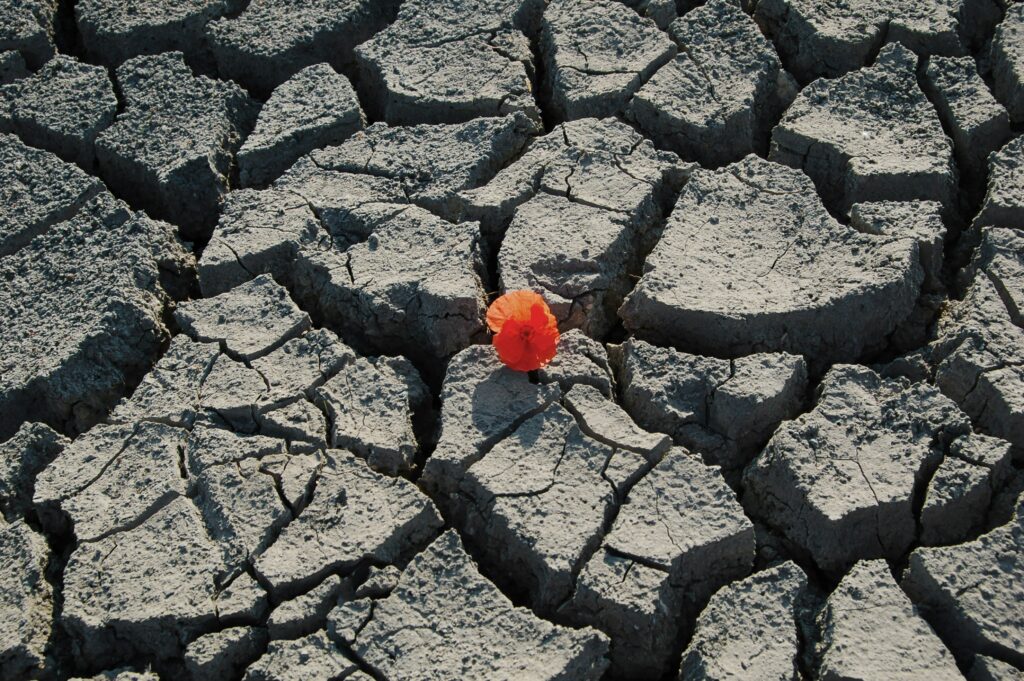
This challenge becomes even more apparent when applied to Nature-based Solutions (NbS) – actions that protect, restore, and sustainably manage ecosystems for societal challenges. Traditional metrics, often shaped by economic logic, struggle with NbS’s inherent complexity. The core difficulty is assessing the long-term, interconnected, multi-benefit value of ecosystems (like a mangrove forest simultaneously providing coastal protection, fisheries support, carbon sequestration, and community cohesion). These compounding benefits resist simple, single-output economic valuation.
Crucially, we must acknowledge that resilience is neither a simple solution nor an inherently equitable one. Trade-offs are innate: building capacity for one group or resilience attribute can inadvertently increase vulnerability for others or lead to maladaptive outcomes. This risk is amplified when efforts to place a financial value on nature, treating it as an investment asset, impose Western valuation systems (like privatization and legal land ownership). These systems often fail to align with local cultural frameworks or recognize customary land rights, potentially exacerbating inequality for communities who manage resources as a commons.
Beyond these tensions, we must confront the risk of “resilience-washing.” This policy trap occurs when focusing on “building local resilience” de-politicizes vulnerability, wrongly suggesting that communities bear sole responsibility for coping with climate impacts. This thinking distracts from the fundamental need for government and systemic interventions to address root causes and reduce overall risk exposure.
Challenges in Measurement Standardization
Standard assessment approaches tend to prioritize what is easy to quantify, treating ecological and social dimensions separately and missing their interconnected feedback loops. Some of the current efforts draw on varied methods:
- Indicator-based tools: Tracking metrics like income diversity or access to clean water (e.g., the Resilience Assessment Framework (RAF) leveraging indicators for urban contexts, developed through a multi-stakeholder process).
- Co-created monitoring systems: Participatory methods, such as tracking changes in ecosystem health, while integrating high-tech tools (like satellite imagery) with traditional ecological knowledge of Indigenous communities.
- Dynamic process models: Such as agent-based models (ABMs) simulating how changes in resource management or policy (like regulating fishing quotas near a reef) might cascade through ecosystems and economies.
While static indicators can capture important proxies for resilience capacities, they risk missing dynamics like thresholds, path dependence, and learning, when acting on their own. Food systems, for instance, are not fixed but shaped by dynamic, relational forces (crops, markets, governance, history).
Resilience is best understood as the latent capacity of a system, expressed through ongoing processes of persistence, adaptation, and transformation – an ongoing negotiation with the environment, rather than a single end-state outcome. Because the pressures and capacities in each place differ, resilience looks different everywhere. Any measurement framework must therefore be structured enough to guide analysis yet flexible enough to account for this diversity of context.
The ABCD Framework: Building Blocks of Resilience Capacity
A prominent example providing a common narrative for diverse stakeholders to describe resilience is the ‘ABCD’ framework (Meuwissen et al., 2019; De Steenhuijsen Piters et al., 2021). Focused on food systems, this framework analyses resilience using four interdependent capacities that represent the active mechanisms for how a human-nature system can anticipate, absorb, adapt and transform to change:
- Agency: Capacity for self-organisation and proactive decision-making.
- Buffering: Assets and reserves (financial, ecological, social) that cushion shocks.
- Connectivity: Strength of relationships, networks, and governance structures.
- Diversity: Variety of species, livelihoods, and strategies that provide alternatives.
This framework captures both human and ecological foundations of resilience, making it well-suited for NbS where social and natural systems are deeply intertwined.
The Lived Measurement of Resilience
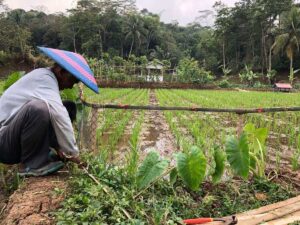
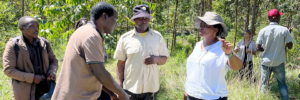
In my research with smallholder farming communities, local representatives used the ‘ABCD’ framework to describe their experience yet had the flexibility to interpret it in their own context-specific way. They assessed their experience through the resources, relationships, and choices available to them. By diversifying her crops to mitigate drought risk, a farmer is strengthening Diversity and demonstrating Agency. When a cooperative shares stored grain during a price shock, they are drawing on Buffering made possible by strong Connectivity. These intuitive practices revealed resilience as a lived, ongoing process of adjustment using both reactive and proactive approaches.
Locally grounded assessments can capture what top-down indicators miss: qualities like trust, social cohesion, local leadership, and intergenerational knowledge, which are difficult to quantify, yet are central to resilience of local communities. The challenge for external measurement is determining the ‘enough’ threshold for these social attributes, as the required level is contingent on the specific risk and context – e.g. the level of trust needed for flood management differs from that needed to manage armed conflict or corruption. NbS that overlook these social dimensions risk focusing on ecological restoration without strengthening the capacities that allow people to build resilience alongside nature.

Toward Measuring What Matters
A holistic approach to measuring resilience in NbS must combine structured evaluation frameworks with perspectives from the ground. Rather than imposing external indicators, assessments can be co-designed with communities, using mixed-method approaches (like the UNU’s SEPLS initiative) that integrate quantitative data with qualitative insights and lived experience.
Crucially, measurement must support learning, not just reporting. When communities define their own resilience, the process itself strengthens governance and long-term adaptive capacity, turning measurement into a tool for empowerment. Embracing the complexity and recognising the interconnectedness of social and ecological systems allows resilience to become a living, evolving capacity of people and ecosystems to adapt, regenerate and grow amid change.
Next time, we’ll look at what resilient communities are already doing to cultivate the ABCD building blocks from the bottom up.

References
De Steenhuijsen Piters, B., Termeer, E., Bakker, D., Fonteijn, H., & Brouwer, H. (2021). Perspective Chapter: Food System Resilience-Towards a Joint Understanding and Implications for Policy. In Food Systems Resilience. IntechOpen. https://doi.org/10.5772/intechopen.99899
About the Author
Aliya is a sustainability and agroecology specialist, driven by a passion for connecting stakeholders on joint solutions for resilient and equitable food systems. With an MSc in Resilient Farming and Food Systems (Wageningen University), she undertook extensive field research with smallholder farming communities and analyzed global donors’ strategies to identify key levers for food system resilience. She currently leads the global secretariat of the World Alliance of Mobile Indigenous Peoples & Pastoralists, supporting their rights, livelihoods, and advocacy, bringing a versatile background in corporate, NGO, and intergovernmental sectors.