


It’s been exactly six years since I first started thinking about an organization like Nature For Justice. With the help of others — including Frank Hicks and many more — that loose concept became reality just two months later when I wrote my first blog post, “Help People Where They Are.”
What a journey.
I’ve always believed it’s useful, periodically, to step back and take a dispassionate view of what we’ve built — the honest kind, not the version that goes in a fundraising deck. So, with the help of my friend Claude (a question worth asking: is it dispassionate or is Claude just telling me what I want to hear?), here is where we have arrived.
What We’ve Got Right
A clear and differentiated mission. Rather than treating nature as a commodity to be traded in isolation, we’ve built our work around a more complete truth: that land, water, plants, animals, culture, and Indigenous rights are inseparable. That’s a more holistic framing than most social justice or conservation organizations operate from, and it matters.
A genuine community-first model centered on authentic voices. The social justice and conservation worlds are full of organizations that talk about local leadership but still design solutions from the outside in. We’ve worked hard to be different by identifying authentic voices of individuals who are living as part of the world in which we are working. With these individual leaders we have nurtured trust-based partnerships where frontline communities own, lead, and directly benefit from what we do. That’s a real departure from the top-down norm, and it’s something I’m proud of. (Check out our Canada program, First 30×30.)
Blended finance innovation. We’ve developed an approach that bridges communities, investors, and technical experts to co-create financially viable nature-based solutions — combining philanthropic, public, and private capital rather than depending on any single stream. That’s harder to build than it sounds.
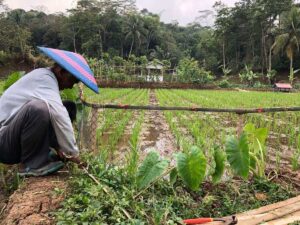
Geographic breadth and organizational learning. We work across three very different contexts: smallholder farmers and local communities in Africa, Indigenous Nations stewarding conserved areas in Canada, and farmers transitioning to regenerative practices in the United States. Operating across these different ecosystems and governance systems makes us smarter and more adaptive.
Respect for plural knowledge systems. We’ve worked genuinely to honor Indigenous and local knowledge, weaving it with Western science rather than subordinating one to the other. That’s not just good values — it produces better and more resilient solutions. And by ‘resilience’ it is recognizing that local empowered governance is at the heart of a resilient system.
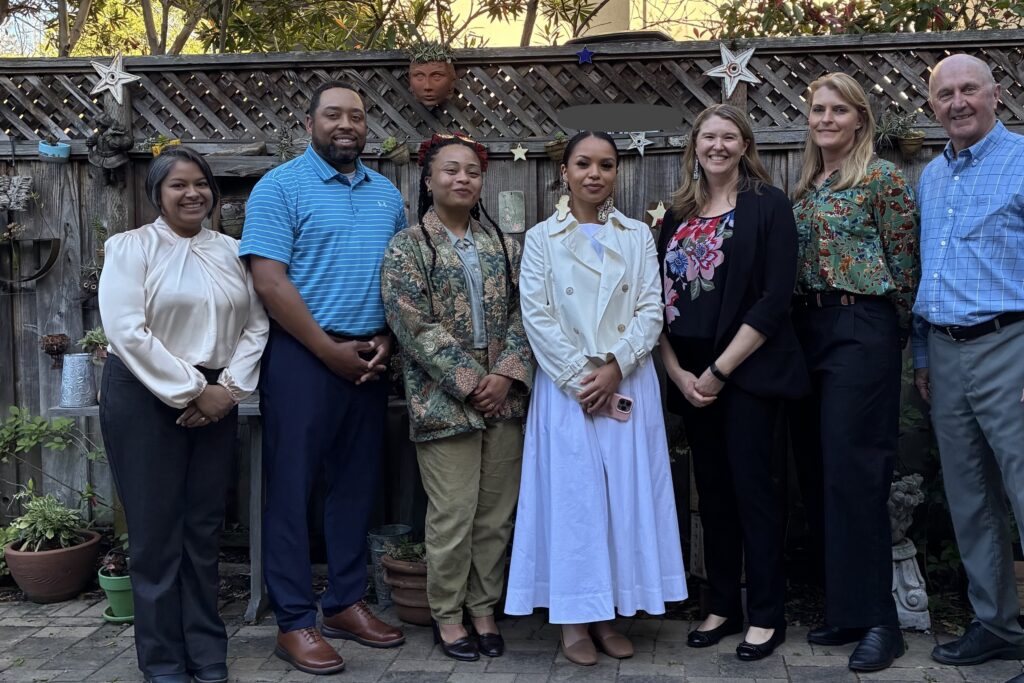
A diverse, multi-cultural, and multi-skilled team. The strengths above could not have happened without the people we’ve been able to attract to our mission. This is probably what I’m most proud of. It energizes me to take lessons from those who work with us — as employees, contractors, and partners. We are equipped to take anything on (our team).
What We Still Need To Fix
Now for the harder part. Each of these weaknesses is real. I’ve tried to be honest not just about what the problem is, but why it exists and what we’re doing about it.
Limited transparency on outcomes. We talk about measuring for impact, but we haven’t yet published concrete data or outcome metrics in any systematic way. The drivers are real: we’re still young, and the outcomes we’re pursuing — ecosystem restoration, community resilience, long-term economic change — take time to materialize. But “we’re early stage” only goes so far as an explanation. By the end of 2026, we commit to reporting on our outcomes in a systematic, public way. That’s not a soft goal. It’s a line in the sand.
Our experience with nature credit markets has been sobering. We advocate for equitable access to these markets, and that remains the right goal. But the honest truth is that carbon and nature markets have faced serious integrity challenges — greenwashing, price volatility, verification failures — and several of our major funders and investors pulled back when they realized that developing high integrity nature-based projects needs a level of patience that shareholders are not used to. And let me be clear, their backing away was in no way linked to N4J. But we haven’t been transparent enough about how we navigate these challenges. We need to say clearly where we stand on market integrity, what safeguards we apply, and what we do when markets don’t deliver. That clarity is overdue.

Scale and organizational maturity are real constraints. The honest story is that scaling has been slowed by a shortage of capital and, frankly, by not yet having a compelling enough message to attract major donors. We’re working on both — refining how we communicate the impact model and building relationships with funders who can make a step-change investment. But I won’t pretend we’ve cracked it.
Our business model still depends too much on external finance. The blended finance approach is innovative, but it still fundamentally connects communities to global markets and outside capital. That’s a structural vulnerability. If markets shift or donors change priorities — as some already have — community programs feel the impact. The path to greater self-sufficiency requires further modifications to our business model. We’re working on what that looks like, but we’re not there yet. (We’re making progress. See our Farmer Prosperity Program).
We haven’t really done advocacy. It’s listed as a core pillar. The honest answer is that it isn’t yet, not in any meaningful sense. Advocacy requires specific expertise, relationships, and sustained focus that we haven’t built. It’s not currently in our skill set. Rather than continue to list it as something we do, we need to either invest in building that capacity or find a partner who can bring that capability to the table.
Where This Leave Us
Six years in, Nature For Justice is a real organization doing real work — with genuine relationships, genuine impact, and a genuine point of view that the field needs. I don’t say that defensively. I say it because the weaknesses above only matter in the context of something worth building.
The gap between what we say we do and what we demonstrably deliver is the work of the next phase. Closing that gap — on outcomes transparency, on market integrity, on scale, on financial resilience, on advocacy — is how we earn the right to the mission we’ve claimed.

That work starts now. And even a year from now, I hope to write a post that’s a lot shorter on caveats. If our message is compelling to you and you feel you can help, please reach out. My history, going back to the days of working in the Somali refugee camps, is to build strong teams, partnerships, and focus on helping people where they are.